What if you don't have to 'fix' yourself?
Hey Caitlyn,
I've spent a lot of time in the self-help and healing world (since I was 23). First as a client and later as a practitioner.
A lot of what you hear in that space is: improve yourself.
So you buy a program to become more confident, less of a people pleaser, more magnetic, less needy…
And the sales work because it’s built on a powerful premise: there’s something wrong with you and everything will be okay if you fix it.
Internal Family Systems (IFS) doesn’t see it that way.

IFS understands that if something isn’t working in your life, it’s not because you’re broken.
It might look like:
extreme shyness
oversharing
relationships that keep falling apart
avoiding
feeling stuck
inner criticising
people-pleasing
overthinking
withdrawing
hyper-independence
These patterns can have a real impact and you might be feeling that.
That’s often what brings people to look for support.

These are not flaws; they're protective mechanisms.
Parts of you that are trying to help, in the only ways they know how.
For example…
The inner critic might be trying to keep you safe by pushing you to improve and avoid judgment, failure, or shame.
The pleasing part might be trying to maintain connection and prevent rejection or conflict.
The stuck part might be keeping you where things feel known, so nothing overwhelming or uncontrollable happens.
The overthinking part might be trying to anticipate problems and keep you in control.
The withdrawing part might be trying to protect you from hurt, disappointment, or emotional intensity.
None of it feels great, but it does feel safer.
From an IFS perspective, there are no “bad” parts, just these are intelligent protective strategies.
Rather than fighting or trying to fix them, IFS helps you build a relationship with them, so they can relax and shift naturally.
So what actually helps an overthinking part stop spinning at 2am?
Not more control, effort or affirmations.
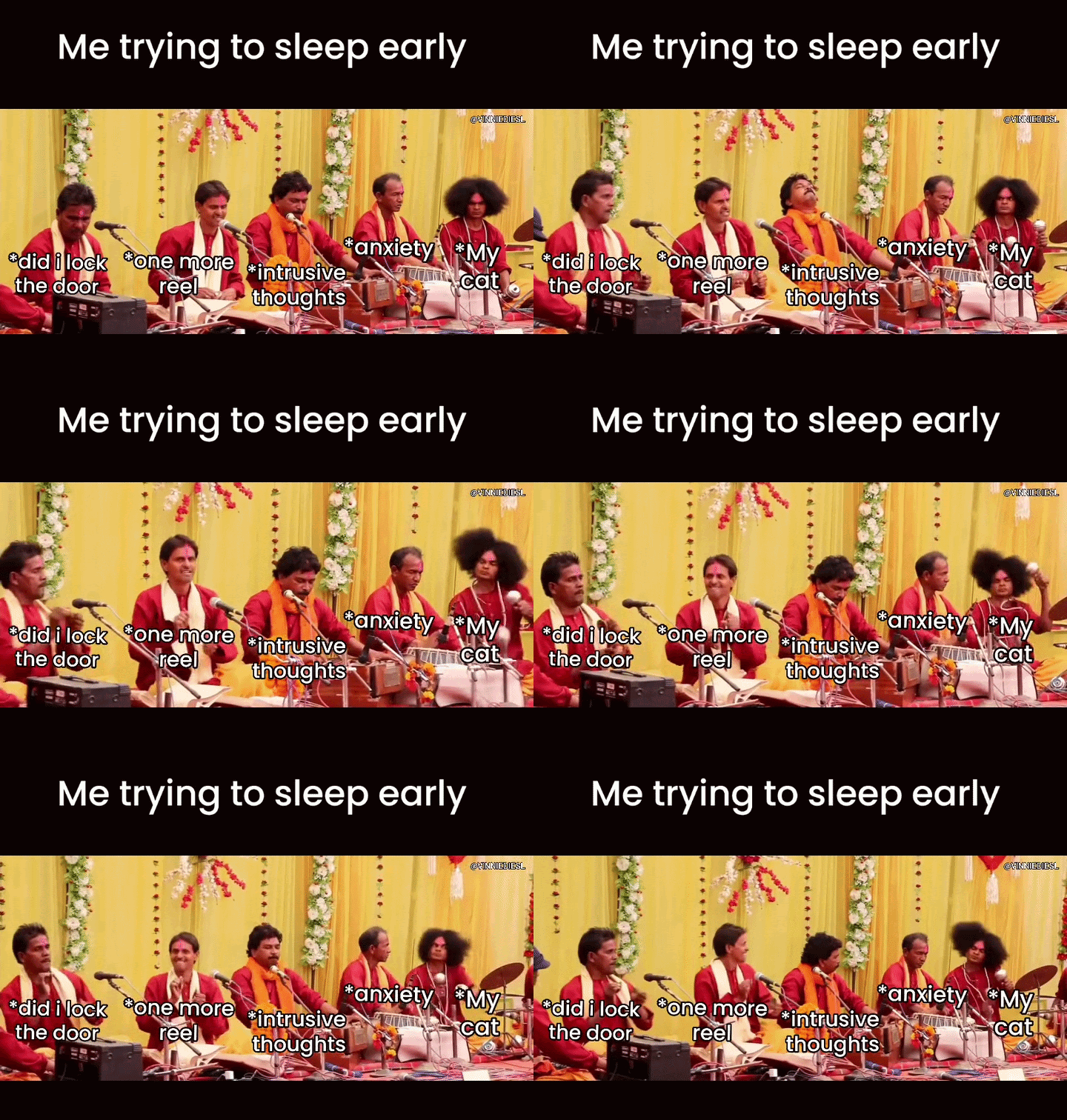
Through the IFS framework, the protective part meets the deepest you: the Self.
It's like discovering an ace in your hand.
The Self (the most core you) is whole and complete. Confident, clear, compassionate and creative... Patient, understanding and powerful...
Naturally.
You don't have to 'become' more anything. It's just a matter of allowing the parts to soften back and allowing your Self to be felt and lived.
Like the clouds parting to reveal the sky.

And from here, you can support the protective or wounded parts and live your life from your Self.
If you'd like to find this ace in your hand and come back into balance, let's talk about 1:1 IFS-informed sessions.
Warmly,
Caitlyn
P.S. If you're curious about what others have experienced in IFS-informed sessions with me, this is what Nicole, a school teacher living in Sydney, says,
"I like how the IFS sessions get to the root cause of the problem. I have done years of talk therapy and it wasn’t until I started somatic therapy and addressed the trauma stored in my body that I saw a significant improvement in my life. Caitlyn's 1:1 sessions are more value for money than other therapy options I have tried."
To find out more, let's chat (free).
To get more like this direct to your inbox, please subscribe to my Substack.
